The Fifth Wave of PPM: From Process Management to Human Empowerment
August 6, 2025 | 4 min
The question is no longer if AI will change project portfolio management—it already is. The real question is: Where does automation end, and where does strategic value creation begin? We’ve witnessed four seismic shifts in how enterprises manage projects and portfolios. From the rigid mainframe scheduling systems to Microsoft Project’s desktop democratization, to server-based enterprise tools, to today’s SaaS platforms that promised visibility and collaboration.
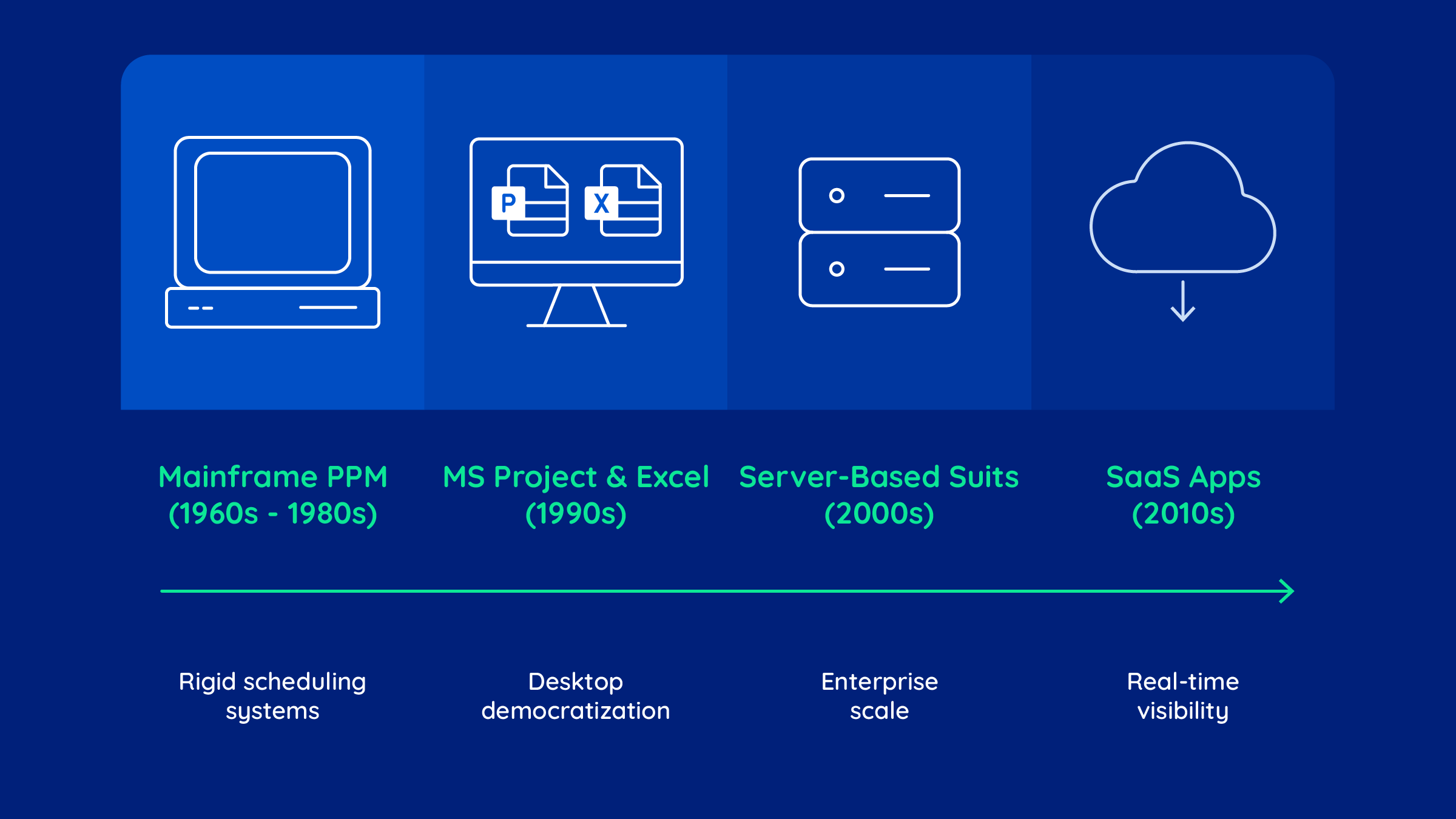
Each wave solved the previous generation’s core limitation: Mainframes gave us computation. MS Project gave us accessibility. Server tools gave us enterprise scale. SaaS gave us real-time visibility.
Now we’re entering the fifth wave, and this one is fundamentally different. AI isn’t just improving existing workflows; it’s redefining what’s possible when human strategic thinking meets machine intelligence. In this new era, Next-Generation PPM isn’t about better project tracking. It’s about intelligent orchestration:
- Context: persistent understanding across portfolios, programs, and meetings
- Tool Use: intelligent assistants natively integrated into workflows
- Governance: policy-aware permission, budget, and compliance controls baked in
This is exactly what we are building and envisioning with cplace Citizen AI: the logical evolution of Citizen Development that integrates GenAI into our No-Code and Low-Code capabilities, seamlessly fitting into existing project management workflows.
Put that together, and you don’t just manage projects. You orchestrate impact across entire enterprises.
The Real Opportunity: From Information Overload to Intent Amplification
In every organization, the greatest bottleneck isn’t data—it’s clarity. AI changes the game from asking “What is happening?” to “What matters most right now?” With autonomous project assistants, predictive resourcing, and AI agents surfacing risks before they become realities, we move from reactive firefighting to proactive orchestration.
We don’t need more dashboards. We need insight engines. At cplace, we’re building exactly that. Our Citizen AI approach democratizes access to these insights.
We enable every team member to contribute to solution development while AI augments human decision-making across enterprise-wide programs. This isn’t about replacing project managers; it’s about amplifying their strategic impact.
And under the hood, we’re taking that a step further. We’re exploring our cplace MCP-Server to connect structured knowledge from cplace with LLMs and more third-party tools. MCP, short for Model Context Protocol, is quickly gaining traction as the standard for letting LLMs tap into enterprise data safely and smartly. It lets agents securely access live project portfolio data in cplace, stay within permission rules, and actually do really useful (and impressive) things. Like pulling context, taking multi-step actions, or automating decisions across tools.
Review: cplace Day 2025
Keynote speech, panel discussion, and customer presentations
cplace Day 2025, Europe’s largest PPM conference, once again offered exciting insights into the topic of project and portfolio management.
Learn from different perspectives how artificial intelligence is revolutionizing project and portfolio management, and how successful companies are taking their PPM to a new level with cplace.
Click here for the recordings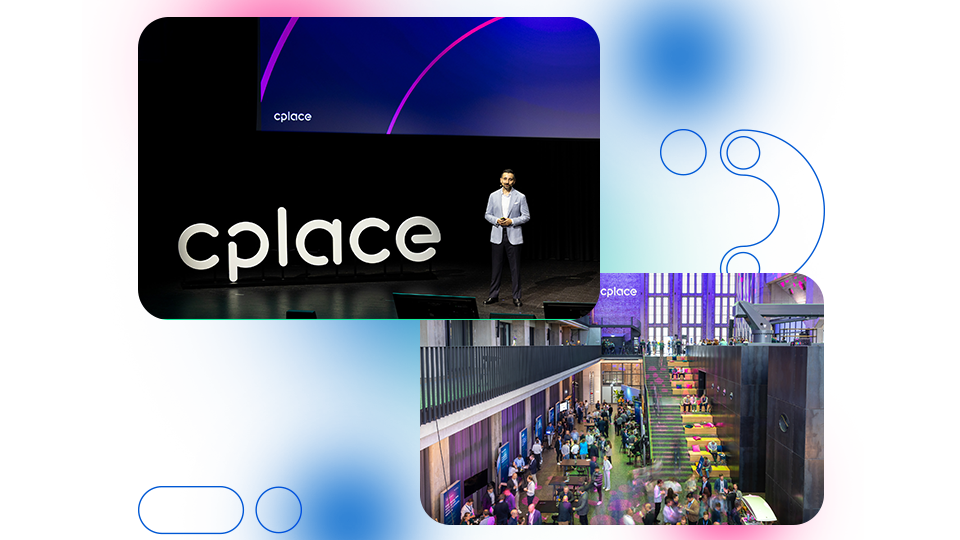
The AI Reality Check: It Must Be Useful, Not Just Powerful
Our north star is not just efficiency, it’s meaningful productivity. AI in PPM should not create busywork; it should eliminate it. It should empower every project manager, team lead, and stakeholder to do the kind of work that humans are uniquely brilliant at: navigating ambiguity, resolving conflict, and aligning visions.
This is why we built cplace with model openness and data sovereignty at its core. You maintain precise control over what information AI accesses while seamlessly integrating multiple AI model providers into your existing ecosystem. No migration effort required, just activation and immediate value.
According to Gartner, around 70% of software providers will have integrated GenAI into their business applications by 2026. But integration isn’t enough. The winners won’t be those who add AI features to old systems. They’ll be those who reimagine PPM from the ground up with AI as a native capability.
PPM Isn’t Dying. It’s Becoming Strategic
Like every role that is being transformed by AI of course the roles of people in Project and Portfolio Management are evolving equally fast. In the era of GenAI, you’re not just a project manager. The new leaders in this space will:
- Design clarity: turning messy data into narratives that drive alignment
- Solve for constraint: turning rigid roadmaps into adaptive, real-time decision systems
- Orchestrate complexity: managing traditional, agile, and hybrid approaches seamlessly
Empowerment is the endgame. Think of what Excel did for finance or PowerPoint for storytelling. Now imagine the same paradigm shift in PPM:
- Citizen PMs can build workflows without writing a line of code.
- Executives can test portfolio strategies via simulations, not slides.
- Every contributor can engage through natural language, not process forms.
The future isn’t AI managing people. It’s AI empowering people to manage complexity—and win. This is what we call “managed diversity” at cplace—the flexible combination of traditional, agile, and hybrid approaches, all orchestrated through intelligent automation but directed by human strategy and creativity.

The Technology That Makes It Possible
Real AI transformation in PPM requires more than chatbots and basic automation. It demands:
- Hybrid data models that adapt to your unique organizational structure without forcing you into rigid templates.
- True platform architecture that enables rapid development of vertical-specific solutions—whether you’re in automotive, life sciences, or manufacturing.
- Citizen Development capabilities that eliminate shadow IT by empowering business users to create and customize solutions within governed frameworks.
- Cross-company collaboration networks that break down traditional project boundaries, enabling true enterprise-wide orchestration.
At cplace, we’ve built the only PPM platform that delivers all of this today. Our customers—leading enterprises across automotive, pharmaceutical, defense, aerospace, and other industrial sectors—aren’t just managing projects more efficiently. They’re executing strategies that were previously impossible.
The Path Forward
The future belongs to those who integrate AI in PPM to reduce friction, elevate context, and amplify the human capacity to lead. This isn’t about choosing between human expertise and artificial intelligence. It’s about creating the scaffolding that lets human creativity and strategic thinking operate at unprecedented scale and speed.
In 2030, the most successful enterprises won’t be those with the most sophisticated AI—they’ll be those who best combine AI capabilities with human insight to drive meaningful business outcomes. Because in the end, AI won’t replace portfolio leaders—AI will amplify the ones who embrace it strategically, thoughtfully, and with clear focus on human empowerment.
About the Autor
Navid Heidemann, Head of Product, cplace
Navid Heidemann has significantly influenced the product development of cplace over the past decade. His commitment to integrating traditional and agile methodologies in PPM has led to significant innovations. Navid is dedicated to democratizing AI in PPM, empowering all users at cplace to optimize operations and strategic insights through cplace Citizen AI.
To the LinkedIn profile