Best PPM Software for Enterprise: Top 5 Tools for Complex Projects and Portfolios (2026)
June 9, 2026 | 9 min
Hundreds of ongoing projects, a dozen different tools, and in the end back to Excel again—this is still reality in many large enterprises. The PPM software introduced years ago is barely used because it is too rigid or too complex. Strategic decisions are based on outdated data, and the project portfolio remains a black box.
Yet today, solutions exist that adapt to the way a company works rather than the other way around and that bring artificial intelligence not as a retrofitted add-on but as a natively integrated component. The enterprise PPM software market, however, is large and difficult to navigate.
This article is aimed at large organizations that must assert themselves in a dynamic competitive environment. For them, a PPM solution that keeps pace with changing processes, structures, and priorities is not a nice-to-have but a fundamental requirement. Five leading platforms are compared against criteria that directly address these demands.
5 Leading PPM Software Solutions at a Glance
For those who want to jump straight to the recommendation, here are the five solutions this article examines:
| Tool | Ideal Use Case | G2.com | Capterra |
|---|---|---|---|
|
cplace |
Organizations with a multifaceted project business operating in dynamic environments and are looking for a solution that adapts to their processes—both today and tomorrow |
|
4,3 / 5 |
|
Microsoft Project & Planner |
Organizations deeply embedded in the Microsoft 365 ecosystem that want to introduce classic project management without a steep learning curve |
4,0 / 5 |
4,3 / 5 |
|
Planisware Enterprise |
Organizations in product and innovation management that can and want to align their processes with a mature out-of-the-box solution based on proven standard methodologies |
3,9 / 5 |
3,9 / 5 |
|
Planview |
Large enterprises with dedicated PPM specialists for whom a broad functional scope takes priority and who can manage the platform’s complexity through trained experts |
4,1 / 5 |
4,3 / 5 |
|
SAP EPPM |
SAP-centric enterprise landscapes where project management must be closely integrated with financial processes |
4,2 / 5 |
No information |
Selection Criteria: How This List Was Compiled
How organizations structure their PPM in practice depends on their industry, established structures, and organizational maturity—making it highly individual. PPM software must be able to reflect this reality. The following criteria are firmly oriented toward the requirements of large, complex project organizations.
Flexibility and Adaptability
Business processes are rarely static. A PPM solution that cannot adapt to new requirements without lengthy IT projects will sooner or later become an obstacle. Evaluated here was how easily the platform can be tailored to an organization’s own processes, methods, and structures—without programming effort or external implementation partners.
Scalability for Enterprise Environments
A platform must be able to grow with the organization: more projects, more users, more complexity. Evaluated here was whether the solution remains stable under real enterprise conditions and covers enterprise-wide requirements such as multilingual support, multi-tenancy, and role-based access control.
Usability and User Adoption
PPM implementations in large organizations often fail not because of the technology but due to a lack of user adoption. Overloading employees with an overly complex platform drives them back to familiar shadow IT solutions such as Excel—and the tool sprawl the PPM implementation was meant to end begins all over again. Evaluated here was how intuitive the interface is and whether the platform can be used productively by project stakeholders without deep PPM expertise.
Integration and Data Consistency
Project data scattered across different systems and files leads to information loss and poor decisions. Evaluated here was how well the platform integrates into existing system landscapes and whether it can serve as a reliable single source of truth for the entire project portfolio.
Resource Management
Managing resources across projects, teams, and locations is one of the most complex tasks in enterprise PPM. Even within a single organization, different departments may be at very different levels of resource planning maturity, making a one-size-fits-all standard rarely effective. Evaluated here was whether the platform supports different planning approaches and can flexibly adapt to varying organizational circumstances.
Portfolio Management
Managing individual projects is one thing—strategically steering the entire portfolio is another. Evaluated here was whether the platform enables an overarching view of project status, dependencies, risks, and strategic alignment, and whether prioritization decisions can be made on a solid data foundation.
AI Capabilities
AI is no longer an optional extra feature but a quality indicator of modern PPM software. What matters is not whether AI is present, but how it is integrated and what concrete value it delivers. Evaluated here was whether AI functions are natively integrated into the platform and deliver measurable added value in core areas such as scheduling, resource management, and portfolio steering.
Implementation and IT Effort
Lengthy implementation projects and high dependency on the IT department are a real barrier in many organizations. Evaluated here was how quickly a platform can be put into productive use and to what extent business departments can independently operate and customize the solution.
PPM Software Compared: 5 Leading Platforms for Enterprise
cplace: Your projects. Your processes. Your AI.
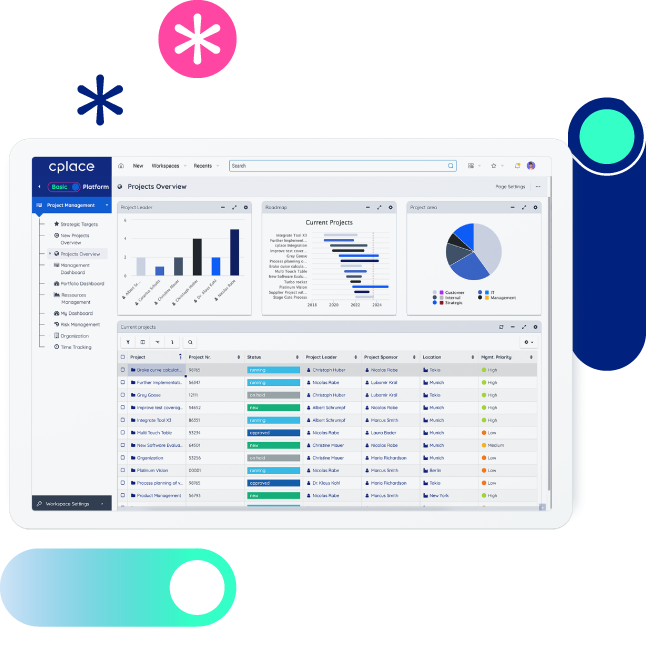
cplace is designed for organizations whose project business is too complex and too individual to be squeezed into a predefined software structure. The platform adapts to an organization’s processes rather than the other way around, and supports classical, agile, and hybrid project work equally.
What sets cplace apart from other platforms
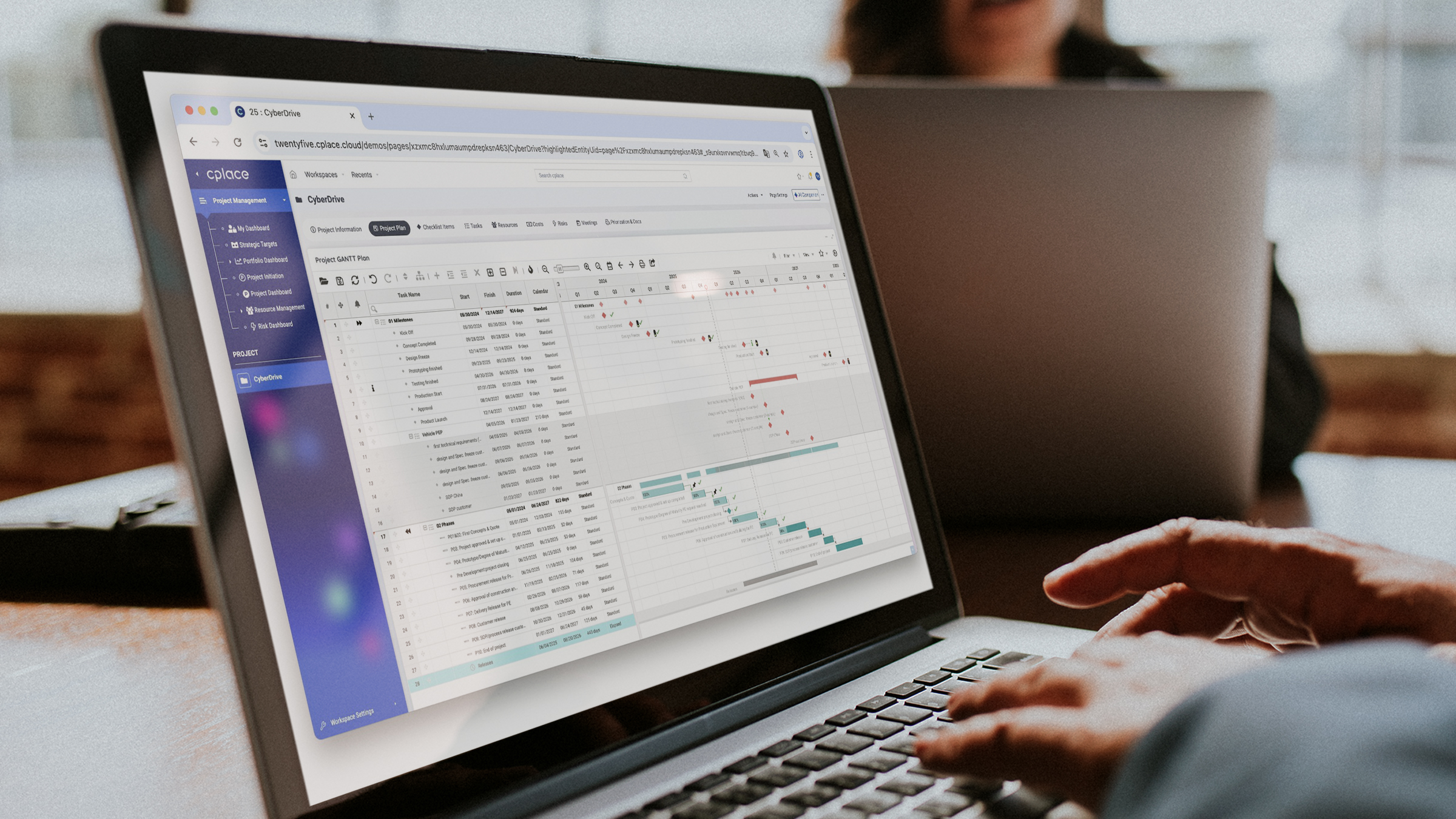
Using a no-code/low-code approach, business departments can independently configure and evolve the platform without relying on IT resources. What takes months elsewhere can be accomplished with cplace in days. Project management, resource management, and portfolio steering all work on a shared data foundation—portfolio decisions are based on the same data that project managers use day to day. cplace AI is natively embedded and delivers contextual support exactly where it is needed: in scheduling, resource management, and portfolio steering.
Who it is suitable for—and who it is not
cplace is particularly strong in industries with complex, interdisciplinary projects: automotive, mechanical engineering, aerospace, defense, as well as pharma and life sciences. What this looks like in practice is demonstrated by the example of MTU Aero Engines. Organizations that simply want to align their processes with a PPM software standard to optimize them will reach their goal faster with a different tool.
cplace at a glance
- G2 rating: 4.7 / 5
- Capterra rating: 4,3 / 5
- Learn more about the cplace PPM platform
Microsoft Project & Planner: Project Management in the Microsoft Ecosystem
Few names in project management are as established as Microsoft Project. Today, Microsoft Planner complements the portfolio as a leaner solution for team-oriented task planning within Microsoft 365.
What sets Microsoft Project & Planner apart
The greatest advantage lies in the deep integration with the Microsoft 365 ecosystem. Those already working with Teams, SharePoint, and Excel will find a familiar environment without a steep learning curve. Microsoft Project offers solid functionality for classic project management: Gantt charts, milestone planning, and resource assignment at project level. Planner complements this for agile task organization in teams. AI support is available through Microsoft Copilot, though it is designed as a broad M365 feature and not specifically tailored to PPM requirements.
A market in transition: The end of Project Online
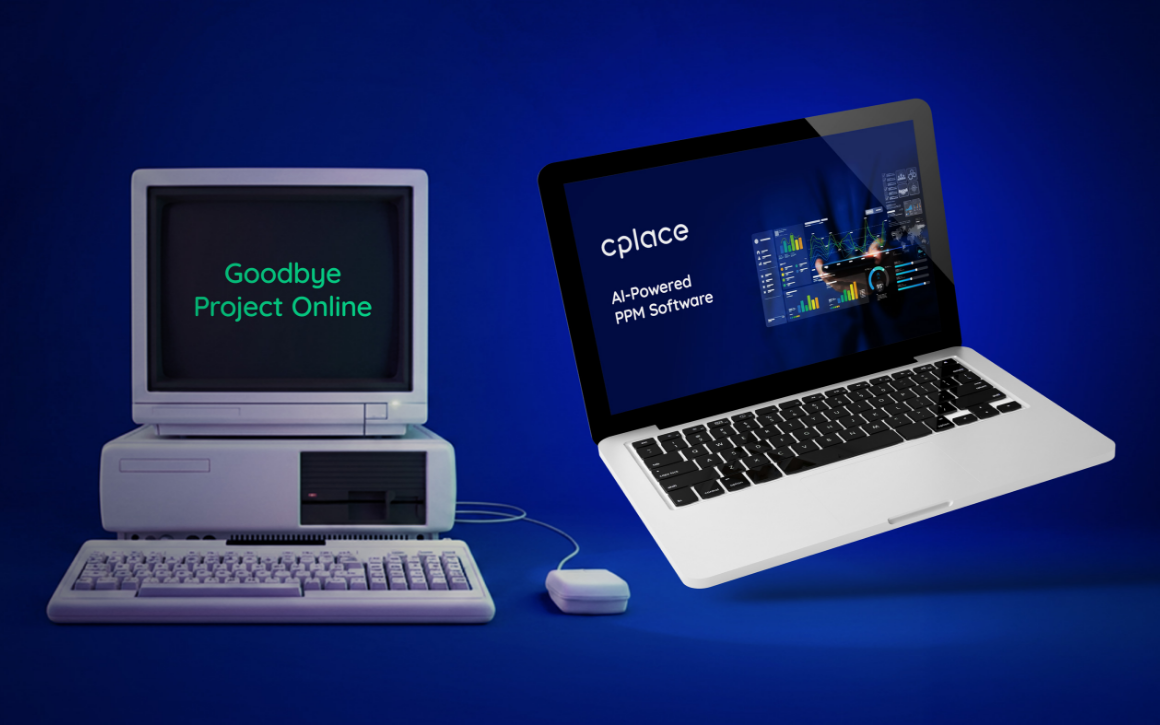
Microsoft is phasing out Project Online and shifting its focus to Project for the Web. For organizations still relying on Project Online, this means a migration in the medium term—a factor that should be considered when making investment decisions.
Who it is suitable for—and who it is not
Microsoft Project and Planner are a sensible choice for organizations deeply embedded in the Microsoft world that want to introduce or standardize classic single-project management. For organizations with complex portfolio management needs, demanding resource processes, or a need for flexibly adaptable structures, the Microsoft solutions quickly reach their limits.
Microsoft Project & Planner at a glance
- G2 rating: 4.0 / 5
- Capterra rating: 4,3 / 5
- Learn more about Microsoft Project
Planisware Enterprise: Established PPM for Product and Innovation Portfolios
Planisware Enterprise is a mature PPM solution with a clear focus on product and innovation management. The software offers a structured, methodologically sound framework for organizations that want to manage their innovation portfolio along proven processes such as Stage-Gate.
What sets Planisware Enterprise apart
The strength of Planisware Enterprise lies in its functional depth: after nearly 30 years on the market, the platform covers almost every project management use case. The solution is particularly strong in budget management and the consolidation of KPIs across multiple organizational levels. For organizations that want to adopt a clearly defined methodological framework and get started quickly, this is a genuine advantage. AI functions are available—for example, for status queries, resource allocation, and forecasting—but as a fixed component of the standard solution without meaningful customization options.
Who it is suitable for—and who it is not
Planisware Enterprise is well suited to organizations that want to build their PPM processes on a proven standard and are prepared to align their internal workflows accordingly. The flip side of pronounced standardization: adapting to organization-specific processes is laborious, and citizen development is not supported. Those who need individual workflows, flexible interfaces, or strong user adoption among occasional users will quickly encounter the limits of Planisware Enterprise.
Planisware Enterprise at a glance
- G2 rating: 3.9 / 5
- Capterra rating: 3,9 / 5
- Learn more about Planisware
Planview: Comprehensive PPM for Specialist Users
Planview is one of the established names in the enterprise PPM market and targets organizations looking for a functionally broad platform for strategic portfolio and resource management. The solution is used primarily in IT, manufacturing, and financial services.
What sets Planview apart
Planview offers an extensive functional scope covering resource management, including skills and materials planning, scenario planning at portfolio level, and change request management. Planview has also expanded this scope over the years through targeted acquisitions, which gives the platform considerable breadth but also contributes to a degree of complexity in day-to-day use. AI functions for portfolio analysis are available but were likewise integrated through acquisitions and are accordingly tied to specific subsections of the platform. The platform is considered demanding in terms of onboarding and is most powerful when a dedicated PPM team actively operates and develops it.
Who it is suitable for—and who it is not
Planview is a sensible choice for large enterprises with experienced PPM specialists who can make full use of the platform’s functional range. For organizations that place value on broad user adoption, flexible adaptability, or low IT overhead, the platform is less suitable.
Planview at a glance
- G2 rating: 4.1 / 5
- Capterra rating: 4,3 / 5
- Learn more about Planview
SAP EPPM: Project Management in the SAP Ecosystem
SAP EPPM (Enterprise Project and Portfolio Management) is SAP’s PPM solution and is aimed at organizations already deeply embedded in the SAP world. It is the successor to the classic SAP PS (Project System) and integrates project management closely with SAP’s core processes in finance, controlling, and procurement.
What sets SAP EPPM apart
The core strength of SAP EPPM lies in its seamless integration with the existing SAP landscape. Project costs, budgets, and resources can be linked directly to financial and controlling processes—without data transfers between different systems. For organizations where project management and corporate finance must be closely intertwined, this is a significant advantage. AI functions are available as part of the SAP Business AI strategy but are tightly bound to the SAP infrastructure and require an appropriate technical foundation.
Who it is suitable for—and who it is not
SAP EPPM makes the most sense when an organization is already running SAP S/4HANA or a comparable SAP infrastructure and operates project management as an integral part of its ERP landscape. Implementation is typically extensive and requires deep SAP expertise—both during rollout and in ongoing operations. For business departments that want to act independently and flexibly, SAP EPPM is rarely suitable: customizations generally require IT resources and specialized SAP know-how.
SAP EPPM at a glance
- G2 rating: 4.2 / 5
- Capterra rating: No information
- Learn more about SAP EPPM
PPM Platforms at a Glance: The Direct Comparison
The table below summarizes the evaluation of the five platforms against the defined criteria.
✓ Strong ○ Limited ✗ Weak
| Criterion | cplace | MS Project & Planner | Planisware Enterprise | Planview | SAP EPPM |
|---|---|---|---|---|---|
|
Flexibility & Adaptability |
✓ |
○ |
○ |
○ |
✗ |
|
Enterprise Scalability |
✓ |
✓ |
✓ |
✓ |
✓ |
|
Usability |
✓ |
✓ |
✗ |
○ |
✗ |
|
Integration & Data Consistency |
✓ |
✓ ¹ |
○ |
✓ |
✓ ¹ |
|
Resource Management |
✓ |
○ |
✓ |
✓ |
○ |
|
Portfolio Management |
✓ |
✗ |
✓ |
✓ |
○ |
|
AI Capabilities |
✓ |
✓2 |
○ |
✓ |
○ |
|
Implementation & IT Effort |
✓ |
✓ |
○ |
✗ |
✗ |
¹ Strong within the respective ecosystem (M365 or SAP), limited beyond it.
2 Advanced AI features are available only with a Microsoft 365 Copilot license. Microsoft Project Desktop does not include dedicated AI capabilities.
The Right Enterprise PPM Solution: What Really Matters
Choosing the proper PPM software is not purely a functional decision. It is a strategic turning point that determines whether an organization can manage its project business in a way that is transparent, controllable, and adaptable over the long term.
Each of the platforms presented has its place: Microsoft Project for organizations that want to introduce classic project management within the familiar M365 environment. Planisware Enterprise is for organizations seeking a proven standard for their product and innovation portfolio. Planview for enterprises with experienced PPM specialists and a need for broad functionality. SAP EPPM for organizations that must anchor project management deeply within their SAP landscape.
For organizations operating in dynamic environments, running a multifaceted project business, and needing a platform that grows with their requirements rather than constraining them, cplace is the most compelling choice. The combination of maximum adaptability, a consistent data foundation, and natively integrated AI makes cplace a platform that reflects the status quo and thinks ahead with the organization.
Frequently Asked Questions about PPM Software
Project portfolio management software is more than a tool for project planning. It enables organizations to plan and manage individual projects, prioritize and strategically steer projects and programs at the portfolio level, and maintain an overarching view of resources, dependencies, and risks. The key difference from pure project management software: PPM software connects the operational project level with the strategic management of the entire project portfolio.
Project management software supports the planning and execution of individual projects: tasks, timelines, milestones, resource assignment at the project level. PPM software can do all of that—and goes further. It adds the portfolio perspective, which projects and programs are prioritized? Where are resource bottlenecks across project boundaries? Which initiatives contribute to the corporate strategy? For organizations with many parallel projects, this combination of project control and portfolio visibility is undoubtedly what matters.
Without PPM software, large organizations lack visibility: projects run in silos, resources are overallocated, strategic priorities remain unclear. PPM software creates a unified data foundation on which decisions about investments, capacities, and portfolio priorities can be made on solid ground. Experience from practice shows that organizations with structured portfolio management are significantly better positioned to pursue and achieve their strategic goals consistently.
The most important features include planning and management of individual projects and programs, cross-portfolio management with prioritization and scenario planning capabilities, flexible resource management across projects and departments, and an intuitive user interface that can be used productively by non-PPM experts. Increasingly relevant is a native AI integration that delivers concrete value in scheduling, resource management, and portfolio steering.
The most important step is an honest assessment: how complex is the project business? What processes at individual project, program, and portfolio level need to be mapped? What is organizational maturity in project management? And how much IT effort is realistic? A PPM platform should not only reflect the current state but also be able to keep pace with the growing requirements of an organization.
About the Author
Julia Gerstner, Content Marketing, cplace
With its Next-Generation Project and Portfolio Management technology, cplace is revolutionizing and transforming the way people and organizations collaborate on complex projects. The flexible software platform enables leading companies to create customized solutions for digital transformation and developing complex products.
Go to LinkedIn Profile