These Are the Project Management Trends for 2026
December 4, 2025 | 5 min
Three fundamental changes are on the horizon
Project management is currently undergoing a period of profound change. Artificial intelligence is transforming professional fields and the nature of technological support. In addition, traditional value chains are continuing to break down. Three key developments are emerging for 2026 that will have a lasting impact on project work.

Trend 1: The End of Junior Positions in Project Management
Figures show a dramatic change: in Germany, there are now 45 percent fewer junior positions in project management than five years ago. This development is no coincidence but rather the result of several interacting factors.
Artificial intelligence is increasingly taking on tasks that were traditionally performed by young professionals. Administrative tasks, updating project plans, reporting, and data transfer—all of these repetitive tasks can now be performed more efficiently by AI systems. Many companies have already announced plans to cut jobs in the coming year and replace them with AI.
Senior project managers still in demand
At the same time, the requirements for project managers are constantly increasing. Certifications, solid methodological expertise, and strong soft skills have long been basic requirements. Added to this are strategic understanding and leadership skills—skills that career starters cannot possess. The gap between what companies need and what young professionals can offer is widening.
Companies are responding to this situation by increasingly seeking senior project managers and experienced project and portfolio managers. These specialists have the expertise required to manage complex projects, while AI takes care of routine operational tasks. This interrupts the classic career path from junior to senior.
In the long term, this means that the profession of junior project manager as we know it will die out. Career starters need to position themselves differently—with specialized skills that go beyond traditional entry-level tasks. Projects are unique and require individual solutions that demand human judgment and experience. AI functions here as a competent project assistant, but not as an independent project manager.
Review: cplace Day 2025
Keynote speech, panel discussion, and customer presentations
cplace Day 2025, Europe’s largest PPM conference, once again offered exciting insights into the topic of project and portfolio management.
Learn from different perspectives how artificial intelligence is revolutionizing project and portfolio management, and how successful companies are taking their PPM to a new level with cplace.
Click here for the recordings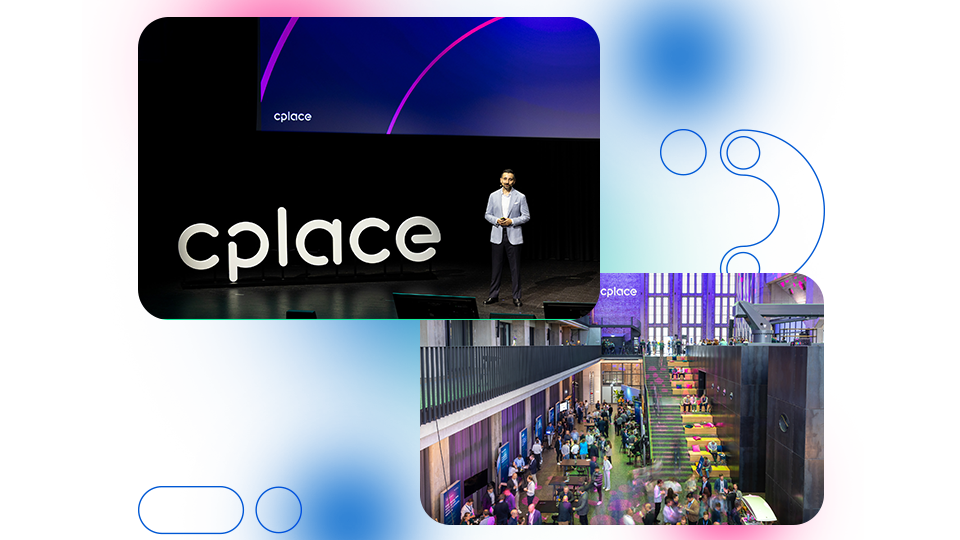
Trend 2: Survival of the Fittest—Only Adaptable PPM Systems Will Survive
Project management software is facing a turning point. The integration of AI is no longer a nice-to-have but is becoming a critical success factor for PPM systems. However, the success of this technology fundamentally depends on one aspect: acceptance and responsible use by the people who work with it.
AI has established itself as an efficiency booster in project management. It supports communication—for example, by translating or summarizing project information for specific stakeholders. Risk analyses are becoming more precise, and countermeasures can be identified earlier. The use of AI has become standard in data analysis and processing.
The success of AI depends on users
The situation is similar when it comes to resource allocation: AI can find the right employees for project tasks and assign them if they have free capacity. This prevents overloading and underloading. AI can also make valid effort estimates based on historical data.
This also points to the core challenge: without reliable, comprehensive, and valid data, even the best AI cannot make meaningful predictions. PPM systems depend to a certain extent on the quality of the data provided by their users. This means that project staff must be motivated to enter and maintain data correctly and completely.
Flexibility ensures acceptance
This motivation does not arise from pressure, but from personal benefit. And the benefit, in turn, is closely linked to flexibility: a system must adapt to people’s requirements, not people to the software! When project staff experience the added value of their data maintenance firsthand—through better decisions, automated routine tasks, or faster analyses—they will actively use the system. Platforms that already have AI integrated into individual solutions and allow project members to develop their own apps are particularly efficient.
PPM’s AI Revolution Is Here
Read on to find out, how cplace’s AI vision is leading the most significant transformation PPM has ever seen.
Watch the recording!
Trend 3: Collaborative Project Management as an Element of Value Creation
In many industries, value creation has long since shifted away from taking place primarily within individual companies. In many industries, up to 70 percent of value is created in networks with suppliers and sub-suppliers. This reality is changing the way projects need to be organized and executed.
Collaborative project management is evolving from an optional feature to a critical success factor. Complex projects are divided into independent sub-projects, with suppliers taking responsibility for their areas. A previously agreed framework plan defines key milestones to which all parties commit. Deviations are immediately reported to the next level and reviewed for their impact.
The key challenge lies in balancing collaboration and independence. When exchanging information, companies must carefully differentiate: What should be shared internally? What information can be shared with external partners? This consideration requires tact and clear structures.
Cross-functional cooperation is the new standard
Rigid approaches do not work in collaborative ecosystems. Every collaboration is individual, every project is unique, and every company involved has its procedures. That is why companies need to systematically develop their collaborative project management skills. This involves three pillars: decentralization and delegation, networking and communication, and genuine collaboration.
Cross-functional cooperation has long been the norm in product development projects. Original equipment manufacturers (OEMs) work closely with suppliers, and sub-suppliers are involved in planning. This cross-company form of cooperation characterizes everyday project work and requires new skills from all those involved.
Those who can act agilely in the value chain and drive projects forward through collaboration in the future will secure competitive advantages. Companies that master this form of collaboration can respond more flexibly to market requirements and develop innovations more efficiently. Collaborative project management is thus becoming an integral element of modern value creation.
Whitepaper
Collaborative Project Management
Find out how to master cross-functional projects through decentralization and delegation, networking and communication, and genuine collaboration.
Learn more
Outlook: Reinvention Requires Holistic Thinking
Project management will have to fundamentally realign itself in 2026. Three dimensions will interact: AI technology will take over routine tasks, experienced experts will manage complexity, and the quality of collaborative work will determine success. Companies that master these three aspects will hold their own in the face of intensified competition.
This is not about technological gimmicks, but about fundamental questions: How do we organize project work when traditional entry-level positions disappear? Which systems truly enable teams to work better together? How do we create structures for effective collaboration across company boundaries?
The answers to these questions will determine which organizations will be successful in 2026. Only adaptable companies will survive in the long term.
About the Author
Christian Schneider, Content Marketing, cplace
With its Next-Generation Project and Portfolio Management technology, cplace is revolutionizing and transforming the way people and organizations collaborate on complex projects. The flexible software platform enables leading companies to create customized solutions for digital transformation and developing complex products.
Go to LinkedIn Profile