Frontier PPM
August 7, 2026 | 5 min
Software creation just became a conversation. What does that mean for how enterprises manage projects and portfolios? More than most people think.
The Vibe Coding Moment
Something remarkable happened over the last two years. People with no programming background started describing software into existence. Tools like Lovable and Replit turned a plain-language prompt into a working application in minutes. The industry gave it a name: vibe coding.
It’s easy to dismiss this as a consumer trend. That would be a mistake. Vibe coding proved something that changes the economics of enterprise software: the cost of building has collapsed. Not by 20 percent. By an order of magnitude.
The analysts have noticed. In April 2026, Gartner published its first Market Guide for Enterprise Vibe Coding Platforms – the moment a behavior becomes a formally defined market.
And here is what we see happening inside our customer base right now: business teams have noticed too. They are already building. Nowhere is the pull stronger than in project and portfolio management, where every organization runs a process no standard tool quite fits – exactly the gap teams have always closed with spreadsheets, and can now close with generated applications. The question is no longer whether AI-assisted building reaches PPM. It’s whether it arrives governed or ungoverned.
This is the territory we at cplace call Frontier PPM: project and portfolio management at the frontier where solutions are created at conversation speed, and where governance, not generation, decides who wins. Three shifts define this frontier.

Shift 1: Implementation Compresses
For decades, enterprise PPM followed a familiar script: a 300-row requirements document, a lengthy selection process, then an 18-month implementation project before anyone saw value. That script made sense when every iteration was expensive. When changing a solution meant specification documents, development sprints, and deployment windows, you had to get it right upfront.
But when an iteration costs hours instead of months, the logic inverts. Why specify everything in advance when you can build a working version, put it in front of real users, and reshape it the same week? Proof replaces promises. Working software becomes the specification.
For PPM leaders, this changes how you buy, not just how you build. The vendors worth evaluating are the ones who can show you your solution, running on your process, before you commit.
Shift 2: Self-Sufficiency Rises
The second shift is about who builds. In the traditional model, the person who understands the problem and the person who implements the solution are different people, separated by a requirements handoff. Every handoff loses context. Every translation introduces delay and distortion.
AI collapses that distance. The PMO lead who knows exactly why the risk process doesn’t fit can now describe the fix and watch it take shape. Requester and implementer become the same person. In our experience, this is where the real value emerges: not from AI writing code faster, but from removing the handoff entirely.
There is a flip side, and every CIO knows it. If the platform your teams officially use can’t keep pace with them, they will build elsewhere. Shadow IT was spreadsheets and niche tools. Shadow AI is entire applications, built in an afternoon, living outside your security model, your data governance, and your audit trail. Self-sufficiency is coming either way. The strategic question is where it lives.
Shift 3: Value Moves Upstream
When building becomes cheap, building stops being the scarce skill. What becomes scarce instead? Knowing what to build. Understanding how a portfolio process actually works, where the friction sits, which change will move the needle. And knowing how a solution should live in production: who may access it, how it evolves, how it stays compliant as it changes.
This is good news for PPM professionals, not a threat. The craft moves up a level. Less time translating requirements into configurations, more time on judgment, process design, and governance. The domain expert becomes more valuable, not less, because their expertise now converts directly into working solutions.
For the organization, it means the center of gravity shifts from implementation capacity to decision quality. The enterprises that win at the frontier are not the ones with the biggest build teams. They are the ones whose experts can act on what they know.
Watch cplace AI Builder Shape an Enterprise App
Discover in this video how the cplace AI Builder develops a complete enterprise application from a real business scenario.
Watch the Video now!
What This Means for Business
Put the three shifts together and a pattern emerges: speed without governance is just faster chaos. An ungoverned AI-built application is a liability with a nice interface. It has no permission model, no lifecycle, no audit trail, and no path to production quality. Multiply that by every team that discovers vibe coding, and you have recreated the shadow IT problem at ten times the velocity.
That’s why the enterprise question has moved on. Two years ago it was “do you have AI?” Every vendor now answers yes. The real question in 2026 is: is your AI architecturally credible, and is it governed?
Look across the emerging market for AI application generation and a pattern is already visible. Generation itself is becoming a commodity. What separates platforms is everything that happens after generation – deployment, integration, security, day-two operations. The platforms earning enterprise trust are not the fastest generators, but those where every generated application inherits an existing governance model: identity, permissions, compliance, lifecycle. That is the archetype cplace belongs to, with one decisive difference: our platform was built for the deep, interconnected complexity of enterprise portfolios, where a generated application is never an island.
Governed means concrete things. AI actions run inside your existing permission and access model, not around it. AI reads and writes through your data model, under your schema authority, with no shadow copies and no training on your data. AI-generated solutions are built from proven building blocks, verified before production, versioned, and evolvable. The same controls that protect what humans build protect what AI builds. Our cplace AI Product Manager, Julia Hillenkötter, sums it up: “The requirement we hear most from our customers is the governed one: AI has to be able to see less than the person it’s working for. Version history is the classic case — readable by a user, off limits to a model. We’re building AI specific permissions so that restriction is something an administrator configures, not something they achieve by switching AI off.”
Where cplace Is Going
This is the frontier we are building for, and it’s why our architecture matters more now than ever. cplace was built on a flexible, hybrid data model because every enterprise runs a different process. It turns out that same architecture is exactly what AI needs. Rigid schemas produce rigid AI. A flexible data model with real semantic relationships gives AI genuine context: it understands how your projects, resources, risks, and decisions actually connect, and it can act on that understanding.
On this foundation, we are shipping the full trajectory:
- Work with AI: The AI Companion, Assistants, and Agents bring context-aware intelligence into daily portfolio work, from answering questions to proactively acting on events.
- Connect with AI: Our MCP Server makes cplace accessible from any AI client your organization uses. Open by design, no walled garden.
- Create with AI: This is where the frontier becomes real. The cplace AI Builder generates entire governed applications: describe the solution you need, or start from the spreadsheets where your process lives today, and get a production-grade application inside the cplace platform. In days, not months. Our customers are already building with it, cutting solution development costs by more than 40 percent.
The direction is clear: from chats, to assistant, to governed autonomous building. Vibe coding showed the world what’s possible. Frontier PPM is what it looks like when that possibility gets an enterprise home, with governance built in rather than bolted on.
Register now
cplace Day 2026
On October 29, cplace Day will enter the next round—Europe’s biggest PPM conference will return to the Bergson Kunstkraftwerk and bring together the visionaries, innovators, and movers and shakers of the industry.
Get your free ticket now!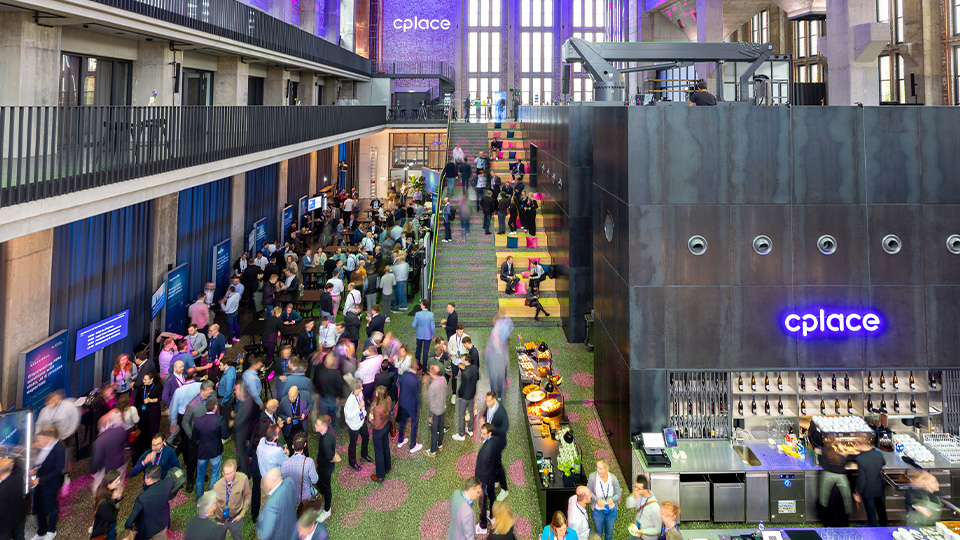
Conclusion: Choose Your Frontier
The three shifts are not predictions. Implementation is compressing today. Your teams are becoming self-sufficient today. Value is moving upstream today. The only real choice is whether your organization meets this frontier deliberately, on a platform designed for it, or accidentally, one ungoverned app at a time. We know which side of that choice we’re building for. The question is: where will your next solution be built?
About the Author
Navid Heidemann, Head of Product, cplace
Navid Heidemann has significantly influenced the product development of cplace over the past twelve years. His commitment to integrating traditional and agile methodologies in PPM has led to significant innovations. Navid is dedicated to democratizing AI in PPM, empowering all users at cplace to optimize operations and strategic insights through cplace AI.
To the LinkedIn profile