Resource and
capacity management software for project-driven
organizations
One live view of resource capacity across projects and line work. See who’s available, who’s overloaded, and who has the right skills, across every team and site.

Resource planning breaks down when capacity is hidden in plain sight

Project and line resource planning live in separate worlds, with no shared view of demand on the same people.

Capacity is trapped in spreadsheet silos, and the same scarce experts get committed twice.

In-house skills stay hidden across departments, and work gets outsourced that an internal resource could’ve handled.

Vacation, training, and line work never make it into the plan, so “available” is a guess.

Demand shifts every week, but the resource plan is a stale snapshot the moment it’s shared.

Come audit time, proving the right certified people were assigned means digging through scattered spreadsheets.
Why resource planning with cplace
pays off
One resource plan for every
project, every team, and every skill
project, every team, and every skill
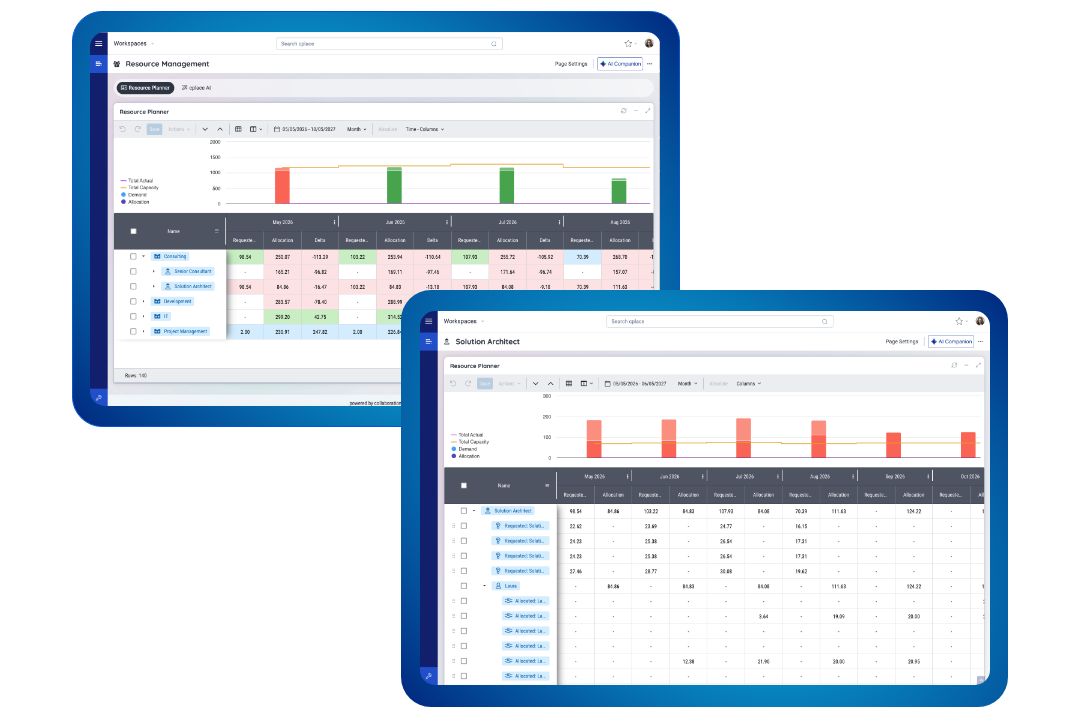
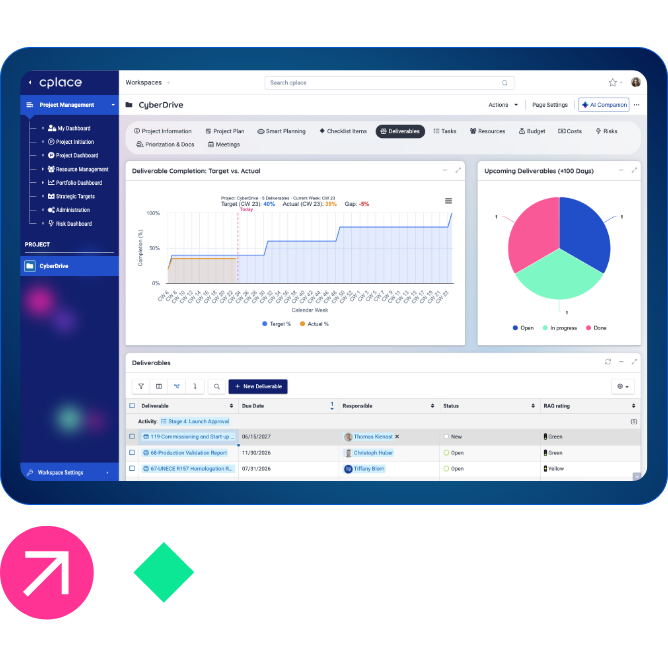
cplace plans project resource demand and line capacity in a single, always-current view, meaning utilization is real, not a guess. Teams plan capacity by role or named person, by skill or certification, and keep their own process. cplace adapts to how the organization already manages resources, not the other way around.

Fewer resource conflicts
See demand on scarce experts across project and operational work, before conflicts escalate.

Bottlenecks spotted early
Surface capacity gaps in time to hire, shift, or resequence work.

Less admin, more capacity planning
Replace spreadsheet juggling and weekly reconciliation with a single platform.

Hidden capacity uncovered
Use cross-department visibility to find in-house resources before work gets outsourced.

Resource decisions on real data
Model and compare allocations before they’re committed.

Adoption that sticks
Give your people an intuitive, adaptable tool they actually use so your resource planning data stays trustworthy.
Trusted by global leaders
















15% better
resource utilization
10% fewer
budget overruns
25% less
time spent on reporting and approvals
Connects with your enterprise ecosystem





How cplace turns resources and
capacity chaos into a plan that holds
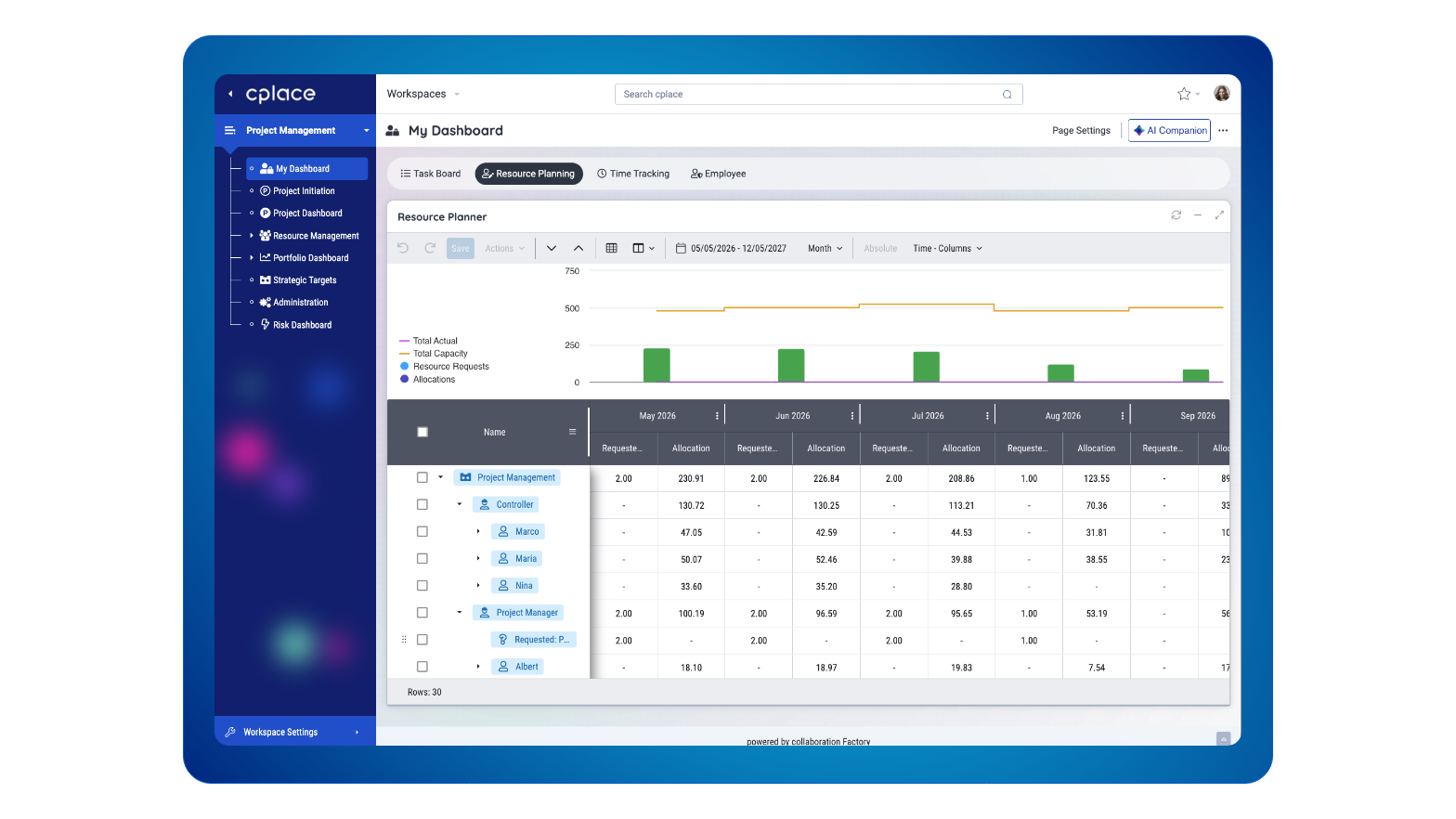
Unified project and line resource planning
View project demand and line availability in the same model, with one picture of who’s committed where.
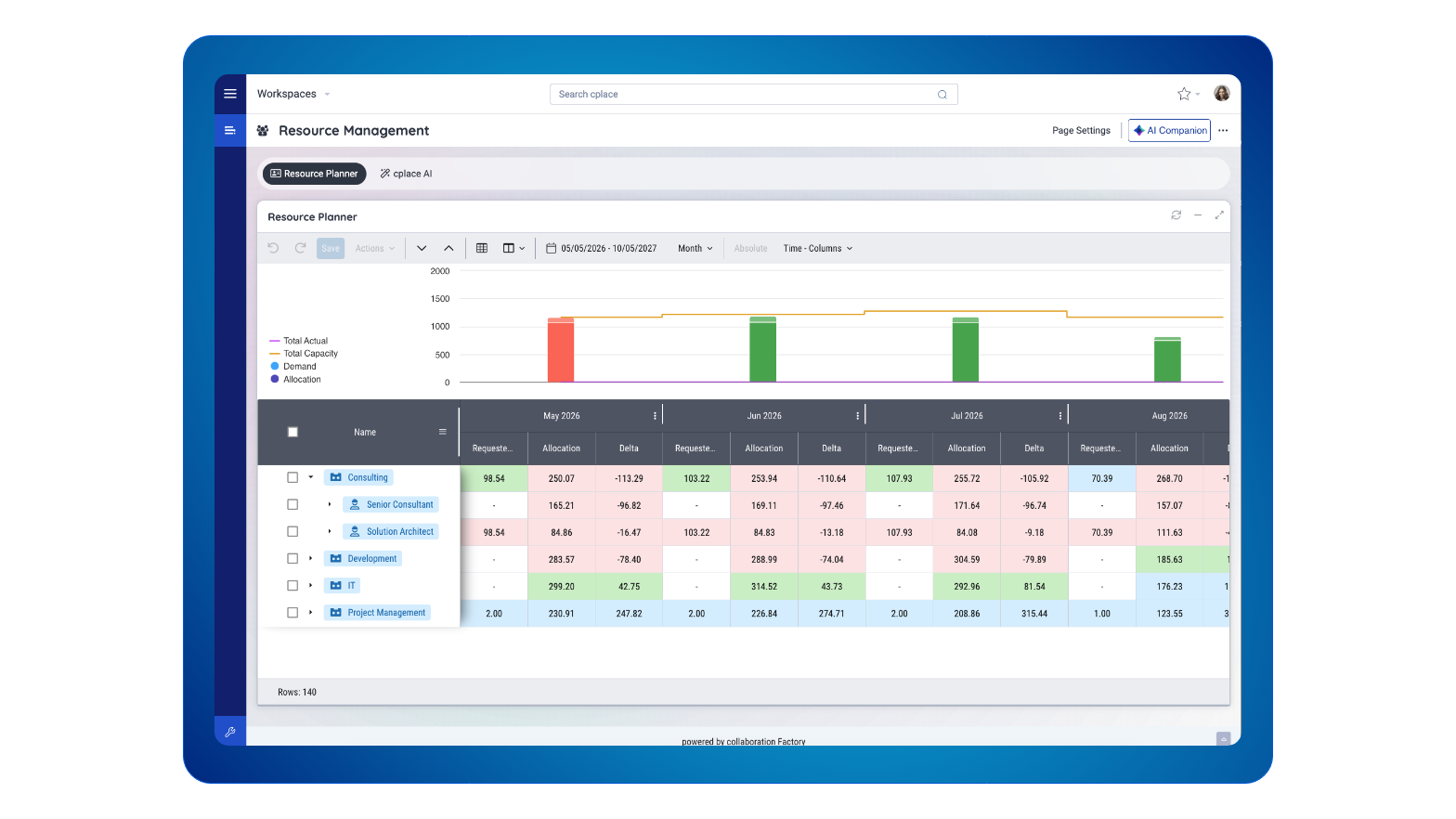
Skill-based resource matching
Match runs by qualification, certification, and level, down to the right person or up to a whole team.
No IT support required
Start fast with preconfigured resource and capacity planning templates; shape the setup with No-Code and Low-Code and embedded AI to adapt to how teams already work.
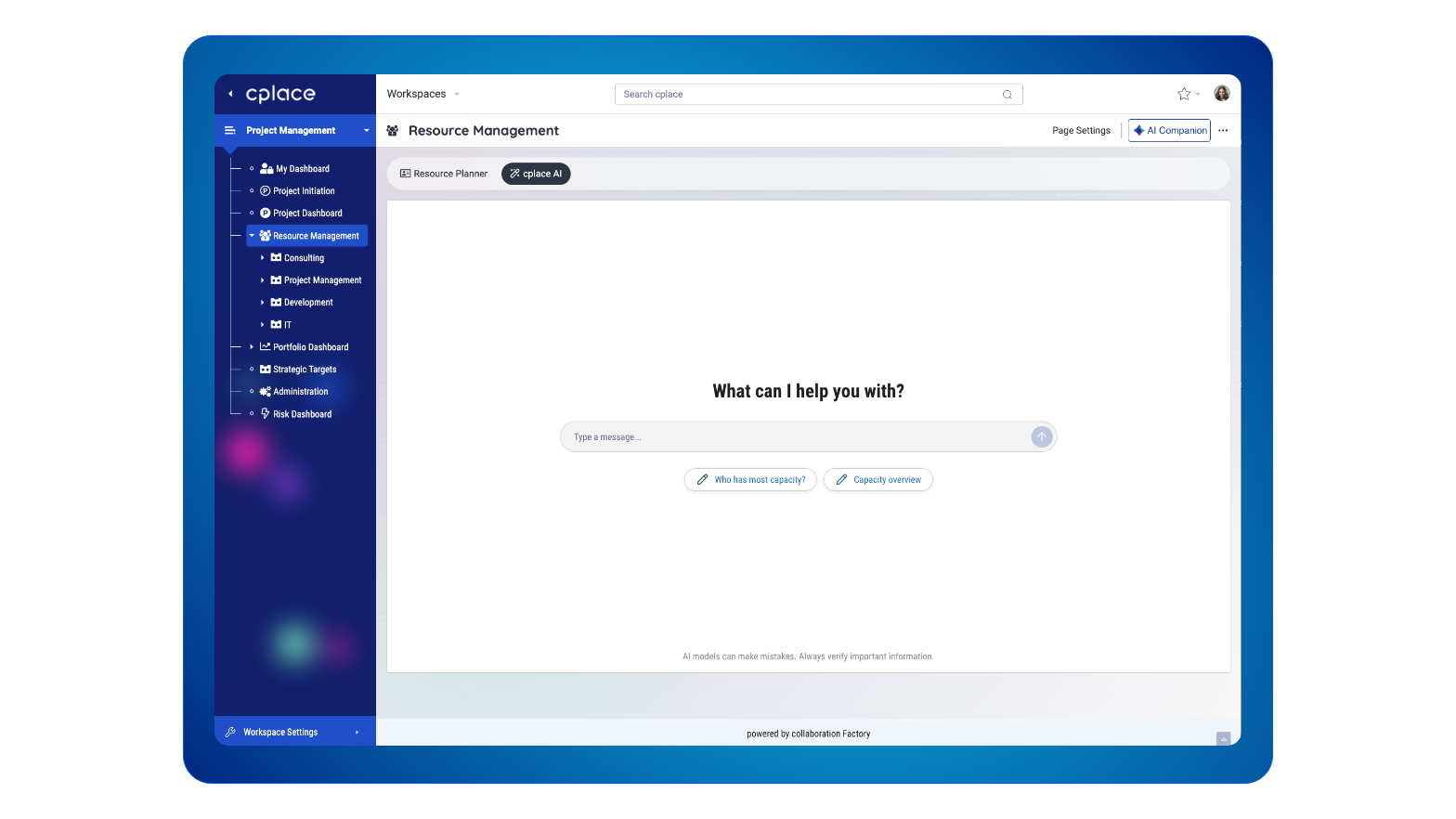
AI that surfaces hidden capacity
before work gets outsourced
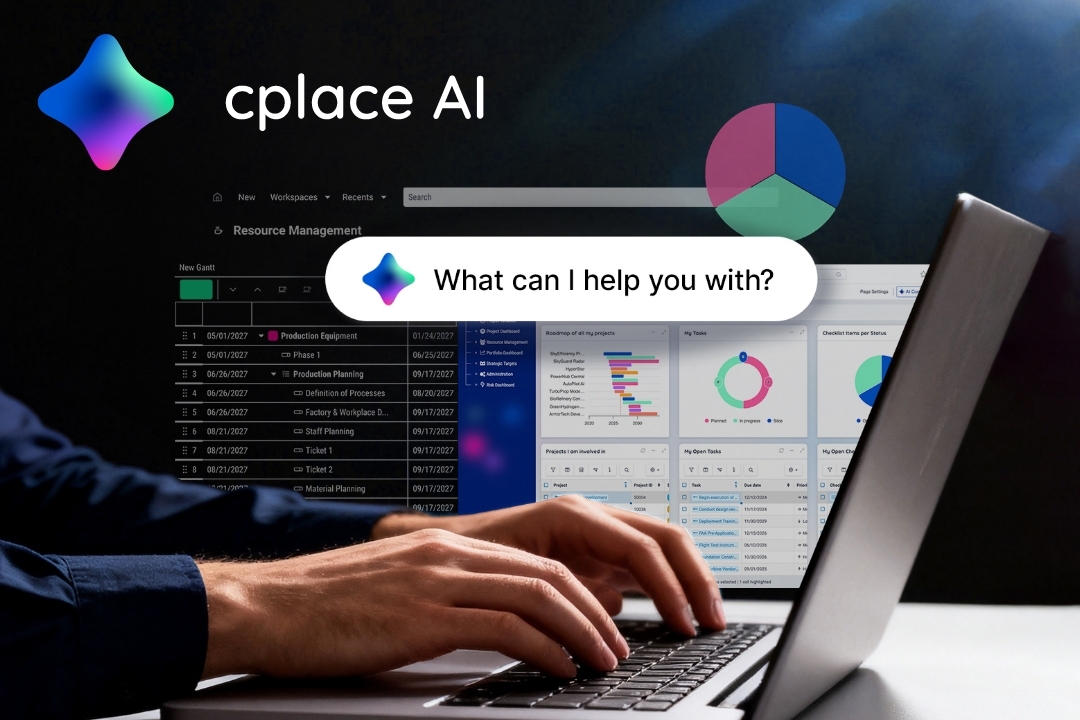
Built into the resource and capacity management platform teams already use. cplace AI reads utilization, peaks, and skill profiles across departments, flags capacity bottlenecks early, and surfaces free in-house capacity.
- Under 1 minute for a full capacity analysis
- Bottlenecks surface 1 quarter earlier
- 100% cross-department visibility
The apps that make resource and capacity management work
Every cplace solution is built from modular apps and templates that snap together and can be tailored without code. Resource and capacity management is powered by

Resource Management
Skill-based capacity planning that unites project and line resource demand in one model.

Matrix Resource Planning
Balances resource demand across functions and projects in matrix organizations.

Resource Planning for Projects
Supports matrix organizations in efficiently allocating all resources and smoothly managing their ongoing projects.
Frequently asked questions about resource and capacity management
cplace resource and capacity management software brings project demand and line capacity into a single, shared view, matched against the people, skills, and time on hand. It adapts to how teams already work, so leaders catch resource conflicts and capacity bottlenecks without disrupting proven processes.
cplace covers the full range of project-relevant resources (named employees, generic roles, skill profiles, and entire teams) and lets each customer define which of those types apply where. The planning level is equally configurable: some workspaces plan at the project or program tier, others at the work package, sprint, or user story level, all on the same underlying data model. That makes it possible to run strategic capacity planning at the portfolio level and detailed assignment planning at the team level without switching tools or duplicating data.
cplace was built around the assumption that project managers and department heads negotiate over the same people, and it gives both sides a shared database instead of competing spreadsheets. Project managers raise demand against roles, skills, or named employees; line managers see aggregated workload across projects and operational work and respond with allocations. Live dashboards surface bottlenecks before they become escalations, and the coordination process stays auditable from strategic portfolio planning down to individual assignment.
Teams can plan in classic, agile, or hybrid modes inside the same tool, the planning level is configurable per workspace, from portfolio down to user story. Modules can be mixed and matched, and no-code or low-code configuration lets a PMO define an enterprise-wide standard while still accommodating departments that need to work differently. That combination of standardization and flexibility is the core design principle behind cplace Resource Management, and it’s what keeps adoption from collapsing the way it often does with rigid suites.
The solution template ships with preconfigured workflows, visualizations, and role-based permissions, so a working baseline is in place from day one rather than after a multi-quarter custom build. From there, no-code and low-code customization lets a PMO adapt screens, fields, and processes live, without waiting on developer cycles. The result is a single source of truth that consolidates planning data from departments and projects, while still feeling familiar enough to the people coming off Excel that adoption holds.
cplace AI assists with three concrete tasks in resource planning: generating demand forecasts based on historical project data, suggesting suitable team members for upcoming phases based on skills and past assignments, and flagging bottlenecks or overloads early enough to act on them. Suggestions are surfaced for review, a resource manager decides whether to accept, modify, or ignore them. Customer data stays inside the customer’s environment and is not used to train external models.